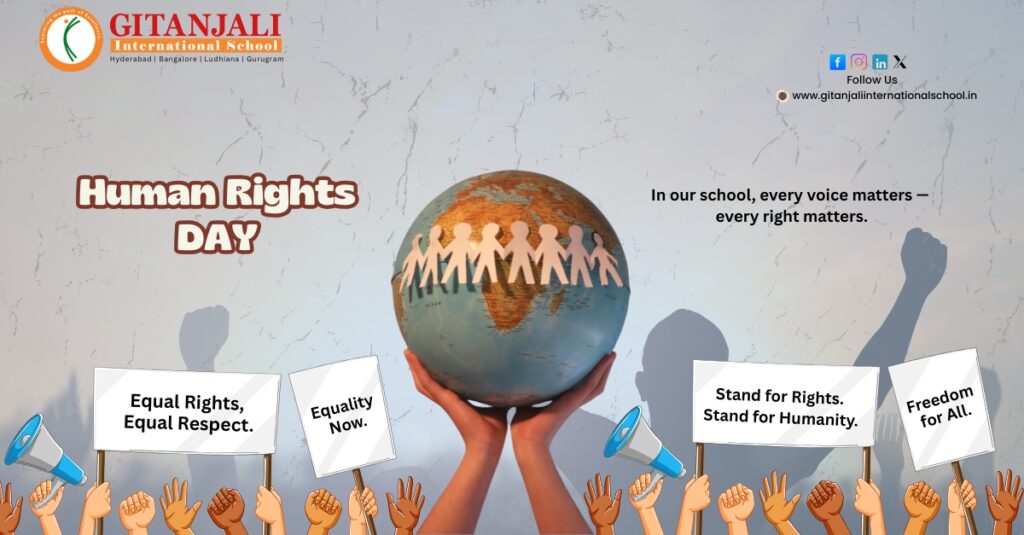
Human Rights Day takes place every year on December 10 to commemorate the United Nations adoption of the Universal Declaration of Human Rights (UDHR) in 1948. The UDHR establishes fundamental rights and freedoms which every person should receive as their birthright without discrimination based on their gender identity or religious beliefs or national origin or personal background.
This day helps schools teach students the importance of equality, dignity, respect, and responsibility while building awareness of human rights. The UDHR provides 30 essential rights which teach students about freedom, safety, equality, education, and protection from exploitation, enabling them to develop into responsible and compassionate members of society.
The Role of Schools in Building a Rights-Respecting Culture
Schools establish the basic foundation which develops students’ attitudes and values through their educational spaces which promote respect and inclusion and fairness. Education serves as a daily practice which enables people to adopt human rights because it teaches them worldwide standards through practical experiences. The school at Gitanjali International School in Kompally Hyderabad demonstrates its commitment to this principle through its fundamental values. The school, which operates as a residential institution in Hyderabad, provides its students with complete development which includes academic success and helps them develop essential moral and social and ethical qualities required to become responsible citizens who uphold their rights.
Why Human Rights Education Matters for Students
- Right to education
- Right to equality and non-discrimination
- Right to a safe and secure learning environment
- Right to express opinions respectfully
- Right to protection from bullying and abuse
- Right to emotional and mental well-being
Empowering Students and Safeguarding Children’s Rights
Governments need to establish strict policies which protect children through mandatory education and child protection laws and rehabilitation programs and awareness campaigns that stop child labor by keeping children in schools. These efforts reinforce the belief that every child has the right to learn, grow, and dream in a safe environment. Human Rights Day shows us that people must take action after they learn about rights and equality because students who study rights and equality and justice become responsible global citizens who fight discrimination and improve their communities through school and family and community support.
How Our School Upholds Human Rights Values
Human rights principles serve as the foundation for all activities at Gitanjali International School because the school implements human rights principles through its value-based education system which follows NEP standards while teaching students to develop empathy and responsibility and respect for others. The school creates a secure space which accepts all people through its strict policies against bullying and discrimination while providing equal chances that help students develop leadership skills and progress through their educational journey. The school places primary importance on students’ emotional and mental health through its staff who provide assistance to students while creating an environment where every student feels understood and respected.
How Our School Celebrates Human Rights Day
At Gitanjali International School, human rights are part of daily learning, fostering empathy, equality, and respect in a safe, inclusive environment. Students’ emotional well-being is prioritized, ensuring every child feels valued and heard.
Human Rights Day Activities
- Rights Awareness Workshops
- Debates and Essay Competitions
- Role-Play and Skits
- Poster Making and Art Competitions
- Community Service Projects
- Human Rights Pledge Ceremony
Government Efforts to Protect Children’s Rights
The government protects children’s rights through its implementation of policies which decrease child labor and provide educational access to children. The combination of mandatory education laws and child safeguarding regulations together with rehabilitation systems establishes a fundamental principle which asserts that all children must have access to secure spaces for their educational development.